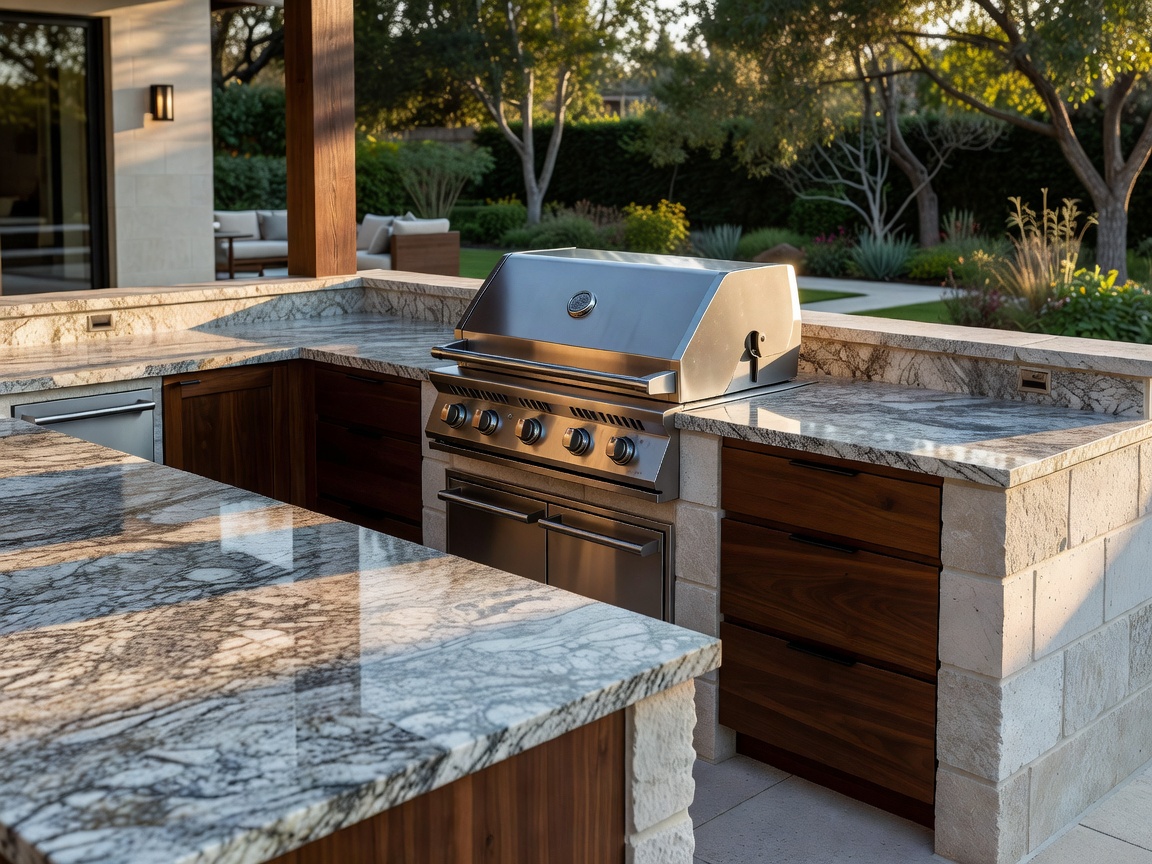
Building an exterior kitchen is far more demanding than indoor joinery. Outdoor culinary installations endure extreme freeze-thaw cycles, ambient moisture, salt airborne corrosion in coastal areas, and direct solar ultraviolet degradation. Without exact structural framing and precise ventilation clearance, even high-end appliances fail prematurely.
1. The Structural Frame: Aluminum vs. Cold-Formed Steel vs. CMU Block
Traditional wood stud framing is unsuitable for outdoor kitchens housing high-BTU gas appliances due to severe combustible fire hazards and inevitable rot. We recommend three non-combustible framing methodologies:
- Structural Welded Aluminum Tubing (6063-T6): Lightweight, zero rust potential, superior for rooftop terraces and suspended deck configurations.
- Marine-Grade 316 Stainless Modular Panels: Factory-sealed modules offering the cleanest interior storage cavities and impervious resistance to coastal chloride exposure.
- Reinforced Concrete Masonry Units (CMU): The heaviest and most rigid substrate, ideal for ground-level stone veneer, flagstone caps, and integrated wood-fired pizza ovens.
Material Comparative Metric
| Substrate Material | Thermal Expansion | Coastal Salt Resistance | Expected Lifespan |
|---|---|---|---|
| 316 Marine Stainless Steel | Low | Exceptional | 35+ Years |
| Extruded Aluminum 6063 | Moderate | Very High | 30+ Years |
| Dense CMU + Portland Base | Extremely Low | High (Sealed) | 50+ Years |
2. Countertop Surfaces: Sintered Stone vs. Quartzite
Standard indoor engineered quartz contains petroleum-based resins that will yellow, crack, and delaminate within two seasons under direct ultraviolet radiation. For exterior durability, choose sintered stone (such as Dekton or Neolith) or dense, unpolished natural quartzite slabs.
Sintered stone is forged under 25,000 kPa of pressure and temperatures exceeding 1,200°C, rendering the slab completely non-porous (water absorption under 0.1%), zero thermal shock risk from scorching cast-iron skillets, and impervious to food acidity like lemon juice and red wine.
3. Appliance Ventilation and Gas Line Safety Code
A frequent installation flaw is neglecting under-island gas ventilation. Liquid Propane (LP) is heavier than air and sinks to the lower cavities of the island, whereas Natural Gas (NG) rises. Island framing must incorporate:
- Lower Louver Vents (within 5 inches of slab): Mandatory for Liquid Propane discharge.
- Upper Louver Vents (within 5 inches of counter lip): Mandatory for Natural Gas escape.
- Insulated Grill Jacket Sleeves: Essential when installing drop-in grills near combustible structural surroundings.
4. Electrical, Plumbing, and Winterization Strategy
All outdoor receptacle circuits must run on dedicated GFCI breakers housed inside watertight in-use wet-rated covers. Sinks require dedicated shut-off valves and compressed air blowout ports inside the basement or mechanical room to purge residual water before the first winter freeze.